The Probate Process

November 16th, 2011

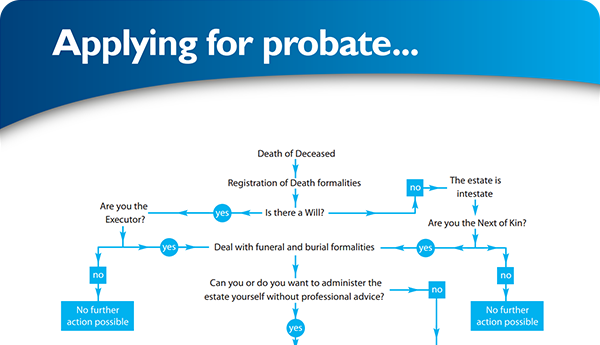
The probate process can be complicated, depending on circumstances and also time consuming. Unless you have already had the experience of dealing with probate, the sheer amount of paperwork can come as a shock. Although it is perfectly legal to make a probate application yourself, many families find this distressing especially in the early days of bereavement. In some cases, probate can take around nine months to complete – often longer if property or a large sum of money, beneficiaries debitors or creditors are involved. The probate format that you need to apply for, will depend on the financial circumstances of the deceased and whether or not a Will has been made.                             

If there are estimated to be over £5,000 of assets left in the estate after funeral costs, you will need to apply for probate as a legal requirement. There are three types of probate format. If a Will has been made, you will need to apply for a Grant of Probate. If there is no Will, you have to apply for Letters of Administration and if there is a Will but no Executor has been appointed you will need Letters of Administration with Will annexed. All these enable you or the solicitor or professional to administer and bring the estate to closure and distribute the funds correctly.

Whether or not you are named in the Will, when you make your probate application you will be known as the personal representative.

There may be no need to apply for probate if there is less than £5,000 left in the estate after funeral costs. In many cases this can be distributed without any formal title so you will probably be able to administer the estate by simply producing the death certificate to the relevant authorities and establishments such as the banks and HM pensions etc. If there is to be an inquest into the death, the Coroner’s Court should provide you with interim death certificates so that you can start the process yourself or make your probate application in the same way. Remember that all deaths have to be registered within 5 days and a death certificate issued.

Even if you do not need the probate process, you may need to have professional representation. Many banks and building societies require that you sign a form stating that you agree to divide the estate in accordance with intestacy laws or the terms of the Will and insist that this be witnessed by a solicitor. The Probate Bureau can advise you on this and whether or not it will be in your best interests to apply for probate.

Resolving even a small estate is still complicated and it is best to take some advice before you start. If you contact the Probate Bureau beforehand, they will be able to advise you whether probate is necessary. They can also advise and help with your probate application should you need it.

Whatever your circumstances, if you are a close relative or executor of a Will you will need to think about the probate process following bereavement. Contact the Probate Bureau to find the best probate format for you.

Share and Enjoy:
  • Digg
  • del.icio.us
  • Facebook
  • Reddit
  • StumbleUpon
  • Google Bookmarks
  • Twitter
  • Technorati
  • Live
  • LinkedIn
  • MySpace

Getting Probate Help and Advice

November 6th, 2011

A situation that many people find themselves in, at least once in their lives, is dealing with the financial and personal effects of somebody close following their death. In most cases, the majority of adults will have left some sort of estate and Probate – the word literally comes from the Latin “to prove,” is the legal process of administering the estate of a deceased person. It has to be done and if you are the person to do it, chances are you will need some probate support because it can be lengthy and complicated. Whether you are named as the Executor of a Will or are the next of kin of someone who has died intestate (without Will) getting probate help and finding out the correct probate information is essential. Many people shy away from using solicitors because of the cost of legal fees, but most need some professional probate advice throughout this time to help them through.

The Probate Bureau was set up to offer probate support to people in this position and provides a cost effective alternative to your High Street solicitor .Specialists in all aspects of Wills and Probate, you can be confident of an accredited professional service at a reduced cost. Unlike solicitors who operate under an open ended hourly rate they will quote a fixed price in advance. They can do this by working with a network of trained financial advisors and solicitors but carrying out much of the routine paperwork in office.  Much of the probate process deals with administration, and as most people know, even a routine letter from a solicitor’s office will be expensive.

You can get probate help by simply contacting the Probate Bureau via their free phone number. By getting the right probate information, you can find out whether your case even needs to go to probate because in some cases where the estate is small or property jointly owned, you may find that it is not necessary. In situations where the estate is straightforward, you may find that you only need some probate advice to start you on the way because you are confident that you can do it yourself. By getting some immediate probate information, you will be able to assess what is right for you.

Because most of us only ever have to deal with probate a couple of times at most in a lifetime, it can be hard to know where to turn to find probate help in your hour of need. The Probate Bureau will offer probate support every inch of the way, no matter how straight forward or complex your situation is. In addition, with no money required in advance and a set fee payable once the estate is released, you can feel confident that you have made the right decision.

You can contact them Probate Bureau for free probate information and arrange to meet with a trained representative in your own home. Getting the right probate advice and as much probate support as you need will ensure that you carry out this important role in the best way possible.

Share and Enjoy:
  • Digg
  • del.icio.us
  • Facebook
  • Reddit
  • StumbleUpon
  • Google Bookmarks
  • Twitter
  • Technorati
  • Live
  • LinkedIn
  • MySpace

Why Wills and Will Writing is Important!

October 26th, 2011

Making a Will is one of the most important things that you can do for your loved ones and ensures that your wishes will be followed after your death. Despite that, over two thirds of people in London die each year without making Wills (intestate) leaving the state to decide who will inherit. Will writing is not a complicated process and although you can do it yourself, it is safer to call in the services of a professional. That way you will be sure that your Will has followed the correct legal procedure and is valid.

The Will department of the Probate Bureau can advise on Will writing and draft a professional legal Will that best covers your interests. The Probate Bureau also provides storage facilities based in London, so even if your copy of the Will goes missing, following your death it can be produced easily.

The inheritance laws are simple to understand and in the absence of a Will, they will be applied. For example, the law does not count any non-legalised relationships such as cohabitation as grounds for inheritance. If this is your situation, it might be that following your death, your beloved partner of 20 years is left with nothing while your long lost brother in Australia inherits the lot! An extreme sounding scenario but sadly this is not that uncommon. Friends or carers are likewise ignored, despite any extenuating circumstances or special relationships you may have.

If you have children or dependents, your Will protects their future and outlines their future care in accordance with your wishes on what is best for them. You can also make a charitable donation. Wills help charities continue with their vital work and even a small bequest is appreciated.

In some cases, you may need specialised legal advice before Will writing. A watertight Will is essential if there are a number of people, who could make a claim on your property, for example. Other types of more complex Wills include the setting up of a trust fund from your estate or there may be other issues. Wills can be as complex or as simple as you need and taking professional advice is crucial to making the best decision. Remember that Wills must be updated following changes of circumstances, for example following a divorce, or birth in the family.

Wills make life much easier for your family after your death. You can state whether you wish to be buried or cremated and the type of service you want. Although you may feel at the time of Will writing that you do not really care, it will help your family at a time when they will be struggling to cope with bereavement following your death.

Wills help keep things simple and avoid the cost and upset of litigation after your death. Many people enjoy the process of Will writing and find peace of mind knowing that all their affairs are in order. Contact the Probate Bureau and find out more about their Will service and fees and if you live in or around the London area or in England meet with a representative in your own home.

Share and Enjoy:
  • Digg
  • del.icio.us
  • Facebook
  • Reddit
  • StumbleUpon
  • Google Bookmarks
  • Twitter
  • Technorati
  • Live
  • LinkedIn
  • MySpace

Trusts for London and England

October 22nd, 2011

A Trust fund can be created at any time and be used for a variety of purposes. Trusts enable you to pass on money or property while you are still alive, can protect the family’s assets after your death, fund a charity, or protect the assets of someone who is too young or incapacitated to deal with financial matters themselves. Trusts are not a new invention. One of the oldest trusts in existence is the City of London Trust, which has been in operation for the last 800 years and is used to finance a range of activities including the maintenance of Tower Bridge.

Although trusts can be set up at anytime, the best option for most people is to create a trust as part of the will. After all, unless you have a lot of property and assets, while you are still living you can probably administer your financial affairs yourself. Although there can be tax advantages to setting up a trust to work while you are still alive, most people do not have enough assets to make this option viable and it is simply not worth the expense.

A trust as part of a Will can help protect your family if anything happens to you. If you have children, you can stipulate that your estate can be held in trust for them until they are old enough to be able to be trusted with financial decisions. That way you will know that they will not blow the lot on a round the world trip or a ritzy pad in London once they hit 18! You can instruct the trust to make regular payments to them but they will not have access to the fund. You can set an age when the fund can be released, based on when you judge that they will be mature enough to look after a lump sum of money.

You can also stipulate where the trust money is to be spent. For example, you can specify that it be used only for educational purposes such as school or university fees, and earmark that the release of further funds will be dependent on gradation or passing exams. A trust fund ensures that the inheritance you leave your children and dependents will remain intact and not at risk from third parties, bad advice and youthful exuberance.

Trusts can enable you to continue to help your descendents after you have gone. By adding a trust to your Will it will help you benefit the next generation. If you do not have children yourself, you can set up a trust fund for someone else, the children of close friends, a charity, a cause you believe in, or anything else that you chose.

However you feel about money, one thing is certain you cannot take it with you! Making a trust will allow you to carry on doing your best for your family or your favourite charity long after your death. If you wish to find out more about Trusts and get some professional advice you can contact the Probate Bureau. If you live in London or the South East, you can meet with an adviser in your own home.

Share and Enjoy:
  • Digg
  • del.icio.us
  • Facebook
  • Reddit
  • StumbleUpon
  • Google Bookmarks
  • Twitter
  • Technorati
  • Live
  • LinkedIn
  • MySpace
Categories: Trusts, Wills Tags: , admin No comments

The Importance of the Probate Process

October 18th, 2011

The probate process can seem a daunting prospect that most people only have experience with following the death of a loved one. Whether it is an expected death such as by terminal illness or old age, or the result of an unexpected and untimely accident, the grief and shock of a death can be very hard to deal and come to terms with. In London alone, around 10 people die unexpectedly on the roads each day and illustrates just how death can strike any of us at random.

The point is that when most people die they leave a whole range of affairs that need to be sorted out. The probate process usually falls to the next of kin to arrange, just at a time when they are suffering from the grief of bereavement. It is a complicated process that has to be dealt with at a time when many people freely admit to not being able to think straight.

The term probate simply means administering or looking after the estate of someone who has died. When you consider the amount of paperwork and assets that most of us accumulate in a lifetime it can be a big job. Property, pension plans, tax ,premium bonds, contracts, stocks and shares, bank accounts , insurance policies all have to be sorted out and any proceeds from these must be passed on to the correct recipients.

The affairs of someone who dies are often messy and complicated especially if the death is unexpected, and they must be arranged and dealt with according to the law. The probate process is part of this legal function and is in place to protect against financial wrongdoing after a death.

If there is a Will, an executor or executors will have been appointed by the deceased, beforehand to deal with affairs in the case of death. The executor must apply to the probate registry for a grant of probate and this gives them the legal right to deal with the deceased persons assets in accordance with the terms of the Will.

If the deceased person has not made a will and has died intestate, the next of kin must apply for a letter of administration to be able to carry out the probate process.

The Probate Bureau was set up to help people through this difficult time and offers a range of services that will help you. Whether you wish to do probate yourself or employ a legal representative to do it for you, the Probate Bureau will be able to help you do the right thing and carry out your obligations.

In some cases, a grant of probate or letter of administration is not required. If the estate of the deceased is under £5,000 for example, it may not be necessary. However making this decision in itself can be complicated and you may run the risk of failing to locate funds that legally may be owning to you or the family. There are estimated to be millions of pounds left unclaimed from deceased accounts in London alone so it makes sense to get the correct legal advice and make sure that the probate process is carried out correctly, why not use the Probate Bureau.

Share and Enjoy:
  • Digg
  • del.icio.us
  • Facebook
  • Reddit
  • StumbleUpon
  • Google Bookmarks
  • Twitter
  • Technorati
  • Live
  • LinkedIn
  • MySpace