


Probate has been granted: what happens next?

Probate has been granted: what happens next?
Once probate is granted, you check the grant for errors, send copies to banks and other asset holders, collect and manage the assets, pay debts and taxes, wait out the two-month creditor period, then distribute the estate under the will or the intestacy rules. The grant is the green light to start dealing with the estate, not the finish line.
According to GOV.UK, you usually receive the grant within 12 weeks of applying. Whether it arrives as a grant of probate or as letters of administration, the next steps are much the same, and the executor or administrator named on it is now responsible for managing the deceased person's estate until it is finished. This guide walks you through them in order, using the real checkpoints that apply in England and Wales: ordering official copies, notifying banks and other organisations, advertising for creditors, dealing with property, settling debts and taxes, and how long the administration is likely to take.
If you would rather not carry the workload yourself, our fixed fee probate service can take over from the point the grant arrives.
First, check the grant carefully
When the grant arrives, read it through before you do anything else. A mistake caught now is far easier to fix than one found halfway through closing a bank account.
There are three kinds of grant, and GOV.UK names them in its guidance on what happens after you apply:
- Grant of probate: issued when there is a will and an executor can act.
- Letters of administration with will annexed: issued when there is a will but no executor able to act.
- Letters of administration: issued when there is no will.
Check that the names, the dates and the details of the person who died are correct, including the date of death and the names of the executors or administrators. If you spot an error, GOV.UK says to return the grant to the district probate registry named on it, so that it can be corrected. Do not use a grant you know is wrong, because banks and other institutions may refuse it and the correction will only cause delays later.
It is also worth knowing that, once the grant is issued, the will becomes a public record. Anyone can ask to see it, so do not be alarmed if a distant relative or a stranger turns out to have read it.
Order enough official copies
Most organisations will want to see the grant, and many will not hand the original back quickly. Official copies solve that problem, because you can send them to several places at once.
GOV.UK's fees page says extra official copies cost £2 each when you order them with your application, and £16 each if you order them afterwards. That is a big difference, so it pays to count your asset holders before you apply. If the grant has already been issued, you can still order more, but each will cost £16.
A good rule is to count the organisations you will need to write to, then order a copy for each one.
Send copies to banks and other asset holders
With the grant in hand, you have the legal authority as personal representative to collect the estate's assets. Personal representatives is the umbrella term for executors and administrators, and the grant is the proof that you can act on the deceased's behalf. GOV.UK says to give copies of the grant to the organisations that hold the person's assets, such as their banks. They will then tell you what they need to close the account or release the money.
Work through a checklist so that nothing is missed:
- Banks and building societies where the person held current accounts or savings accounts. A joint account usually passes to the surviving owner without a grant, but bank accounts and building society accounts in the person's sole name may need one. Each bank will either close the account and release the funds to you, or transfer the balance into an estate account.
- Pension providers and insurers. Some life insurance policies are written in trust and fall outside the estate.
- National Savings and Investments (NS&I), if the person held Premium Bonds or other NS&I savings. NS&I has its own claim process for bereavements.
- Investment platforms or share registrars. Some may release small balances without a grant, while others will not act until they have seen one.
- HM Land Registry, if the person owned a home in their sole name (more on this below).
Each organisation has its own forms and processes, so expect to do a fair amount of letter-writing and form-filling. Most will want an official copy of the grant and a copy of the death certificate, and some ask for extra documents such as proof of your identity. Keeping clear records of who you have written to, when, and what they sent back saves a lot of confusion later.
It is common to open a separate estate bank account so that all the money from closing accounts and selling assets lands in one place. It makes the paperwork simpler and gives beneficiaries a clear view of what has come in and gone out.
Chasing several organisations at the same time is where many executors feel the strain. This is exactly the kind of work our fixed fee probate service handles for families, so you do not have to deal with each asset holder yourself.
Pay debts, bills and taxes
Before anyone inherits anything, the estate has to settle what the person owed. Outstanding debts are paid from the estate's funds, not from the executors' own money, as long as the executor follows the right order and does not distribute too early. GOV.UK's guidance on settling debts and taxes says you should:
- Pay any debts and unpaid bills, such as credit card balances, loans, council tax and utility bills.
- Pay the funeral costs, if these funeral expenses have not already been paid from the deceased's bank account.
- Pay any personal taxes that are due.
- Claim any refunds that the person was owed.
- Repay any benefits that were overpaid.
You can contact HMRC, or use the Tell Us Once service, to deal with some of this. Tax does not stop at the date of death, either. GOV.UK explains in its probate and estate guidance that Income Tax and Capital Gains Tax can arise during the administration period, so the estate may have its own tax to deal with. For example, bank interest received after the death can create Income Tax, and Capital Gains Tax may be due if an asset is sold for more than its probate value.
Keep every receipt and every letter. They show where the money went, and you may need them if anyone asks questions later.
What about inheritance tax?
Inheritance tax is usually dealt with before the grant, because GOV.UK says you must pay at least some of any inheritance tax that is due before you can get probate. But the inheritance tax story does not always end when probate is granted. If you find more assets or debts, or if a property sells for a different value from the one you reported, you need to tell HMRC so it can recalculate the tax. Inheritance tax on property can often be paid in instalments, and those instalments continue during the administration.
Most estates pay no inheritance tax at all, but where tax is due the figures can be complicated. If you are unsure about the tax liabilities, the HMRC probate and inheritance tax helpline or a probate solicitor can explain what applies to your circumstances.
Advertise for creditors and wait two months
You may not know about every debt. A person might have an old guarantee, an unpaid invoice or a bill that has not yet arrived. The way to protect yourself is to advertise for creditors with a statutory notice in The Gazette and, where appropriate, in local newspapers where the deceased lived or worked. These statutory advertisements give unknown creditors a fair chance to come forward.
GOV.UK says you can place a notice in The Gazette, which gives creditors two months to make a claim. Waiting out that period protects personal representatives against later claims from creditors they did not know about. The reason this matters is simple. If you distribute the estate too early and a debt then appears, you may have to pay it yourself. Waiting is the safer route.
This is the step that most often explains why money does not reach beneficiaries as quickly as they hope. The grant gives you authority, but the creditor period still has to run. Wait for it to pass before you hand over anything final.
Deal with the house
What you need to do about a property depends on how it was owned.
If the person owned the home alone
GOV.UK's guidance on updating property records when someone dies says that for a sole owner you send HM Land Registry form AS1 or AP1, together with the death certificate and the original or an official copy of the grant, so the property can be transferred or sold. Check that page for the current form and wording before you send anything, as the right form depends on what you are doing with the property. If the property is sold for more than its probate value, Capital Gains Tax may be due before the final distribution.
If you decide to sell property, you can instruct estate agents before the grant arrives, but the sale cannot complete until probate is granted, because the buyer's conveyancing solicitor will need to see it. Keep the home insured and check whether the insurer needs to know it is empty. Council tax may also need to be sorted out with the local council while the property stands empty.
If the house is being sold, or if you need help clearing it first, we can also help with house clearance and property sale alongside the administration.
If the home was owned jointly
When a surviving joint owner takes over the property automatically, no grant is needed. According to the HM Land Registry blog, the survivor registers the death using form DJP. This is a simpler process, although the rest of the estate may still need a grant.
Distribute the estate and close it down
Once the debts and taxes are paid and the creditor period has passed, you can share out what is left. GOV.UK says you distribute the estate as set out in the will or, if there is no will, under the law. Where there is a valid will, specific gifts such as personal possessions or a sum of money usually go out first, and the rest of the estate is shared between the remaining beneficiaries. Where there is no will, the intestacy rules decide who inherits, starting with a spouse or civil partner and then children and other close relatives.
Before you do, many executors find it helpful to prepare simple estate accounts showing what came in, what went out and what each beneficiary receives. Asking beneficiaries to sign a receipt when they are paid is also good practice. Neither is a GOV.UK rule, but both give you a clear record and protect you if questions come up later.
Pay beneficiaries only when you are confident that all debts, taxes and costs are covered. If in doubt, hold a little back as a reserve until you are sure all liabilities have been dealt with. Some executors make interim payments to beneficiaries part way through, where there is clearly enough money left to cover everything else, and then pay the final amounts once the accounts are complete.
If beneficiaries disagree about the distribution, or someone says they should have received more, it is sensible to pause and seek legal advice before paying anyone. Legal disputes are far easier to deal with while the funds are still in the estate.
How long does it all take after the grant?
The overall timeline for estate administration depends on what the person left and how quickly organisations respond. GOV.UK sets no deadline for finishing the administration process, so the timescale depends on the estate. Straightforward estates move faster, while property sales, foreign assets, business interests, missing beneficiaries or tax issues can cause significant delays.
In The Probate Bureau's experience, a modest estate with no property sale takes around three to six months once the grant has been issued. That is a guide from our own work, not a legal timetable, and delays at banks or other organisations can stretch it.
Let us take the next steps off your hands
The grant gives you the authority, but the work still has to be done. If you would rather hand it over, our fixed fee probate service can take care of the estate from here. Request a callback or call 0800 028 2837 to talk it through.
Key takeaways
- Check the grant as soon as it arrives and return any errors to the district probate registry named on it.
- Extra official copies cost £2 each with the application, or £16 each later.
- Send copies to banks and other organisations so they release the assets.
- Place a Gazette notice and wait two months before distributing, or you may be personally liable for debts that appear later.
- A sole-owned home is transferred using form AS1 or AP1 and a copy of the grant.
- The estate is distributed only after debts and taxes have been paid.
Frequently asked questions
How long after probate is granted can money be released?
Banks and other organisations will act once they see the grant and have completed their own checks. As the executor, you should still hold back distributions until debts and taxes are dealt with and the two-month creditor period has passed.
Can the executor distribute the estate straight away?
It is not safe to do so. GOV.UK says that if you distribute before the two-month creditor period ends and a debt then appears, you may have to pay it yourself. Waiting protects you.
Is a grant of probate a public record?
Yes. GOV.UK says that once the grant is issued, the grant and the will become public records, so other people can ask to see them.
Do I need probate to transfer a house to a beneficiary?
If the person owned the home alone, yes. You send form AS1 or AP1 to HM Land Registry with the grant. If a surviving joint owner takes the property, no grant is needed and they register the death using form DJP.
How long does estate administration take after the grant?
There is no set deadline. In our experience a modest estate with no property sale takes around three to six months, though larger or more complex estates take longer.
Does inheritance tax still need to be paid after probate is granted?
It can. Some or all of any inheritance tax due is paid before the grant, but tax on property paid in instalments carries on, and HMRC must be told if values change. Income Tax or Capital Gains Tax on income received or assets sold during the administration may also be due.
What is the difference between an executor and an administrator?
An executor is named in a valid will and receives a grant of probate. An administrator is appointed when there is no will, or no executor able to act, and receives letters of administration. After the grant, their duties are the same.
Useful resources
- GOV.UK: After you have applied for probate
- GOV.UK: Dealing with an estate
- GOV.UK: Settling debts and taxes
- GOV.UK: Update property records when someone dies
- GOV.UK: Probate fees
- The Gazette
Share This Post


Recent posts
- What is a deed of variation and when does it make sense? By Probate Bureau , 26/11/2026
- What does a grant of probate look like, and who needs a copy? By Probate Bureau , 26/11/2026
- Probate property valuations: how to get it right first time By Probate Bureau , 25/11/2026
2015 Archive
2016 Archive
2018 Archive
2019 Archive
2020 Archive
2026 Archive
2023 Archive
- July 13 posts
0 Archive
- December 1 posts
Blog Categories
Find your way through the probate maze
Click here to follow our step-by–step probate process guide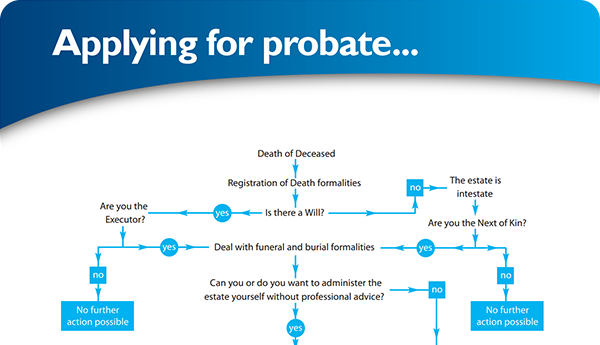
Testimonials
Excellent service, everything went very smoothly. Like to thank Ann and her team.... read more
Good & Reliable service, always kept up to date with what was happening. Value for money.... read more
Latest Tweet
Follow @ProbateBureau


Contact Us
0800 028 2837 info@probatebureau.comTHE PROBATE BUREAU
3 Crane Mead Business Park
Crane Mead
Ware
Hertfordshire
SG12 9PZ
×