


Mirror wills vs joint wills: what couples should know

Mirror wills are two separate wills with matching terms, one for each partner. A joint will is a single document for two people and is rarely used in England and Wales. A third option, mutual wills, binds the survivor to an agreement not to change their will.
Most couples want the same thing: look after each other first, then the children. The wording of your wills decides whether that actually happens. If you are looking at wills for couples, this guide explains the three options in plain English, the main risk with mirror wills and how a trust can address it.
What mirror wills are
Mirror wills are two separate wills whose terms largely reflect each other. Typically, each partner leaves everything to the other, and then to the same people, such as the children, when the second partner dies. This makes them a simple, cost effective option for many couples because the terms broadly match. The Gazette describes them in this way.
The important point is that mirror wills are two separate legal documents, so each person can change or revoke their own will at any time. A mirror will does not stop the survivor from rewriting theirs after the first death. The wills also do not have to be identical wills, so each person can still name their own executors to manage their estate and inheritances, include guardianship for minor children, and tailor gifts, as The Gazette notes.
Mirror wills are by far the most common choice for couples, and many firms offer a reduced price when two are made together.
What joint wills are and why they are rare
A joint will is a single document that serves as the will of two people. It is generally avoided because it can be inflexible. Joint wills are also rare because they can create legal complications after the first death. One document for two people can cause problems when circumstances change, or when one partner dies and the other wants to make changes.
Because of this, most advisers steer couples towards two separate wills. If someone has suggested a joint will, ask for a clear explanation of why, and check how it would work if one of you wanted to change it. Beyond straightforward wills, independent solicitors should check the drafting complies with the law and matches your aims.
Mutual wills: the binding alternative
Mutual wills involve a legally binding agreement between the parties that neither will revoke or change their will after the first death. Once the first person dies, the surviving person is generally not free to change the agreed beneficiaries. The Gazette explains that this agreement is what sets them apart from mirror wills.
The idea is to give the first partner to die confidence that the other party will carry out the intended plan. The downside is inflexibility. If the survivor's circumstances change, for example if they remarry or need to reorganise their finances, the arrangement can remain legally binding on the surviving party for life, so they may be unable to adjust their will without consequences. That can lead to disputes.
Mutual wills are uncommon and tricky, so take advice before choosing them. Our will and trust specialists can explain how they compare with other options.
Side-by-side comparison
| Type | Documents | Can the survivor change it? | Best for |
|---|---|---|---|
| Mirror wills | Two separate wills | Yes, at any time | Most couples who trust each other and want simplicity |
| Joint will | One document for two people | Complicated, and often inflexible | Rarely recommended |
| Mutual wills | Two wills plus an agreement | Generally not, without consequences | Couples who want to bind the survivor, with specialist advice |
Mirror wills work well when both partners are happy with the plan and nothing changes. The risk comes after the first death. The survivor is free to rewrite their will, leave assets elsewhere or remarry, creating a risk of sideways disinheritance, especially in blended families and where there are children from previous relationships.
Remarriage matters particularly. GOV.UK confirms that marriage automatically revokes a will in England and Wales, so if a surviving partner remarries, a new spouse could benefit and the original inheritance wishes may be undone unless a new will is made straight away. If they do not, the estate could pass under the intestacy rules rather than as you both planned. Where everything passes outright to the survivor, those assets fall into their estate and may be reduced before reaching the intended beneficiaries. Our guide to changing a will after someone dies shows how the position can shift once the first partner has died.
Children of a first relationship are the most exposed. If you want to be certain they inherit, mirror wills alone may not be enough.
How a trust can help
A trust inside each will can close the gap. Two common solutions are:
-
A life interest trust. Your partner can live in the home or receive the income for life, but the capital is held in trust and passes to your children afterwards. Your partner cannot redirect it.
-
A property protection trust. Your share of a jointly owned property is held on trust, ring-fencing it so it does not become part of the surviving partner’s estate and stays protected for your chosen beneficiaries.
These trusts balance two goals: looking after your partner and protecting your children. This can be especially useful in second marriages where children from earlier relationships need protecting. If you want to explore this, our team can explain how a trust in each will would work for your family.
Tax points for couples
Married couples, as well as a spouse or civil partner, can leave everything to each other free of inheritance tax, and any unused threshold can transfer to the survivor, according to GOV.UK. If the first spouse leaves everything to the surviving spouse, the unused nil-rate band can transfer too, and with the residence nil-rate band the combined threshold can reach £1,000,000 in some cases. That is a major reason many couples choose this seamless transfer first. From April 2027, unused pension pots are due to count towards estates for inheritance tax, so couples should review the overall tax position, not just the will wording.
The transfer helps the survivor's estate, but it does not protect your children if the survivor changes their will. Tax and protection are separate questions, and your wills should deal with both. Our guide to legal ways to reduce inheritance tax covers the wider planning options, and our financial services team can help you look at the whole picture.
Which option suits you?
Use this short checklist to decide where you fit.
-
You trust each other completely and have the same children: mirror wills are usually a good fit, especially where both partners want the same beneficiaries.
-
You or your partner have children from a previous relationship: mirror wills with a trust in each will are worth considering, but different wishes or a different financial situation may mean a single will or more tailored planning is better than expecting identical arrangements.
-
You want to bind the survivor: ask about mutual wills, but understand the limits.
-
You are unsure: speak to an adviser before you decide.
Whichever route you choose, review your wills after any major change, such as a marriage, a birth, a divorce or a move. Our guide on when you need probate explains what happens to your wills after death.
Mirror wills suit many couples, but not every family or financial situation.
If you and your partner want wills that protect each other and your children, our Will and Trust Department can explain the options at a free home appointment. Request a call back from The Probate Bureau, or call 0800 028 2837.
You can read The Gazette's explanation of mirror wills for the official background.
Key takeaways
-
Mirror wills are two separate wills with matching terms, one for each partner.
-
Each partner can change their mirror will at any time, including after the first death.
-
Joint wills (one document for two people) are rarely used in England and Wales.
-
Mutual wills bind the survivor but are inflexible and can lead to disputes.
-
A trust in each will can protect children's inheritance if the survivor changes their plans.
Frequently asked questions
What is the difference between a mirror will and a joint will?
Mirror wills are two separate documents, one for each partner, with matching terms. A joint will is a single document that acts as the will of both people. Mirror wills are far more common in England and Wales.
Can a mirror will be changed after one partner dies?
Yes. Each partner can change their own mirror will at any time, and the survivor is free to rewrite theirs after the first death. If you want to prevent that, consider a trust in your will or mutual wills, and take advice.
Are mirror wills cheaper?
Many providers offer a discount when a couple makes wills together, so they are often better value than two separate wills. Prices vary, so ask for a clear quote before you decide.
Do mirror wills have to be identical?
No. They largely reflect each other, but they do not have to be completely the same. They are separate legal documents, so each person can still reflect their own personal possessions if needed.
Do mirror wills need witnesses?
Yes. In England and Wales, they must be signed in the presence of two witnesses.
What are mutual wills?
Mutual wills are made on an agreement between two people not to revoke or change their wills after the first death. They bind the survivor, but they are inflexible and can lead to disputes, so specialist advice is important.
Yes.
Useful resources
-
The Gazette, What are mirror wills?: https://www.thegazette.co.uk/all-notices/content/101046
-
GOV.UK, Making a will: https://www.gov.uk/make-will
-
GOV.UK, Inheritance Tax: https://www.gov.uk/inheritance-tax
Share This Post


Recent posts
- Discretionary trusts explained for families By Probate Bureau , 29/10/2026
- Letter of wishes By Probate Bureau , 29/10/2026
- What Is a Trust in a Will & How Does It Work? By Probate Bureau , 29/10/2026
2015 Archive
2016 Archive
2018 Archive
2019 Archive
2020 Archive
2026 Archive
2023 Archive
- July 13 posts
0 Archive
- December 1 posts
Blog Categories
Find your way through the probate maze
Click here to follow our step-by–step probate process guide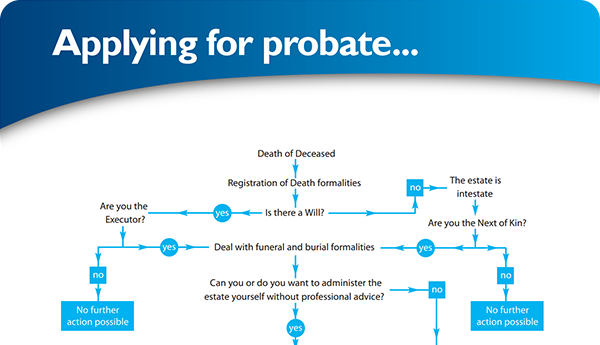
Testimonials
Excellent service, everything went very smoothly. Like to thank Ann and her team.... read more
Good & Reliable service, always kept up to date with what was happening. Value for money.... read more
Latest Tweet
Follow @ProbateBureau


Contact Us
0800 028 2837 info@probatebureau.comTHE PROBATE BUREAU
3 Crane Mead Business Park
Crane Mead
Ware
Hertfordshire
SG12 9PZ
×